
Safety Nets for Balcony — Complete Guide for Apartment Owners in AP and Telangana
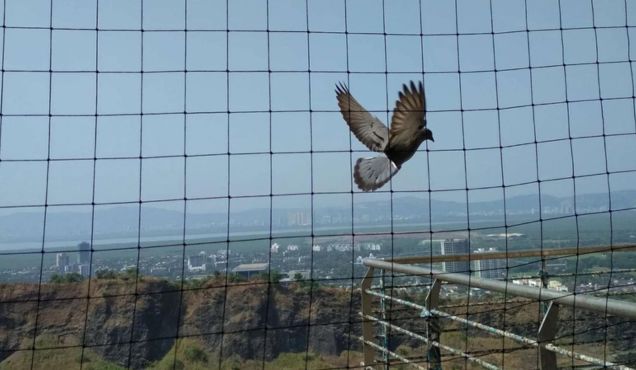
Everything you need to know about safety nets for balconies — materials, installation quality and what to check before paying
Moving into a new apartment in Hyderabad, Vijayawada, Warangal or any other AP and Telangana city and trying to understand everything about balcony safety nets before making a decision — this guide covers it all. Materials, anchoring methods, installation quality checks, timing, what questions to ask and what red flags to look for. Written specifically for AP and Telangana conditions.
Quick Answer
The correct balcony safety net for an AP or Telangana apartment is UV-stabilised HDPE mesh, wall-anchored with stainless steel fixings, professionally tensioned and tension-tested before the installer leaves. Material, anchoring method and installation quality are the three variables that determine whether a safety net works for 6 years or fails in 18 months. This guide explains how to verify all three before paying.
What a Balcony Safety Net Actually Is
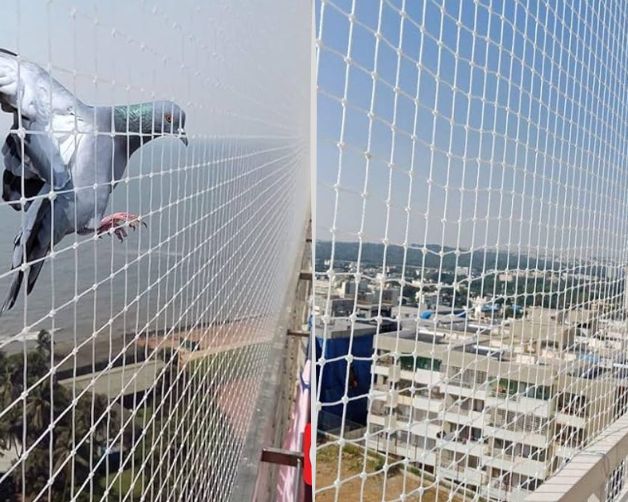
A balcony safety net is a professionally installed mesh barrier across the open face of an apartment balcony — from wall to wall, floor to ceiling slab, with no gap at any edge. It creates a physical barrier that prevents children and pets from falling through or over the railing, and prevents birds from entering the balcony space.
The key word is professionally installed. A safety net is not a product you buy online and clip to your railing. It is a combination of the right material, the correct anchoring method and a quality installation that holds under load. Each of those three elements can be done correctly or incorrectly — and the difference between the two is not visible at installation. It only becomes visible under stress or after 18 months in the sun.
What a Safety Net Is Not
- Not a net clipped to the railing with plastic hooks — that is a railing attachment, not a wall-anchored installation
- Not interchangeable with invisible grills — different product, different material, different purpose hierarchy
- Not something that needs to be the most expensive option to be effective — a correctly specified and installed UV-HDPE net is a reliable long-term product
Materials — UV-HDPE vs Standard HDPE vs Nylon
Three materials are commonly used for balcony safety nets in India. In AP and Telangana, one of them is clearly the right choice. Here is the complete picture.
| Material | Lifespan in AP/TG | UV Performance | Correct For |
|---|---|---|---|
| UV-Stabilised HDPE | 5–7 years | UV-stabiliser additive resists degradation under direct sun | ✅ All AP and Telangana apartments — correct standard material |
| Standard HDPE | 2–3 years | No UV treatment — becomes brittle and weak after 2 AP summers | ❌ Not recommended — too short a lifespan for outdoor installation |
| Nylon | 3–5 years | Moderate UV resistance, absorbs water — heavier when wet | ⚠️ Acceptable but UV-HDPE outperforms in AP/TG climate |
Both materials look identical at installation. Both feel similar to the touch. The difference only becomes apparent after 18–24 months when standard HDPE starts to yellow, become brittle and lose mesh strength under load. Always ask specifically: "Is this UV-stabilised HDPE?" — not "Is this good quality?" The installer who cannot name the material is almost certainly using standard HDPE.
Anchoring — Wall vs Railing — Why It Matters
The second critical variable — and the one most commonly shortcut by cheap installers — is how the net is anchored. There are two methods, and only one of them is appropriate for child safety applications.
Wall Anchoring — Correct Method
Stainless steel eye-bolts or hooks are drilled into the concrete column or wall structure at specified intervals. Anchor depth minimum 50mm into concrete for a load-bearing connection. The net frame is attached to these anchors, creating a structural connection that transfers load directly into the building's concrete frame. A child pushing against or falling into the net transfers force through the net to the wall — not to the railing.
Railing Clipping — Shortcut Method
The net is attached to the existing balcony railing using plastic or metal hooks, clips or ties. Installation is faster and cheaper. But the connection is only as strong as the railing attachment — and balcony railings are designed for hand support, not for dynamic load transfer from a child's weight or fall impact.
Any installer who attaches the safety net to the railing rather than drilling into the wall is taking a significant shortcut. Ask directly: "Are you drilling into the wall or attaching to the railing?" Wall drilling is louder, takes longer and uses more hardware — but it is the only correct method for a child safety application. A net that attaches only to the railing provides a false sense of security.
How to Verify Installation Quality — 6 Checks Before Paying
This is the section most guides skip. Installation quality determines whether a safety net actually works — and a poorly installed net with good materials is still a safety failure. Here is what to check before the installer packs up and you sign off.
What Bad Installation Looks Like
Want It Done Correctly the First Time?
Free site visit across all AP and Telangana cities — UV-HDPE confirmed in writing, wall-anchored, tension-tested before we leave. Same-day response.
When to Install — Timing Guide for AP and Telangana Apartments
Timing matters more than most buyers realise. The best time to install is almost always before you move in.
✅ Best — Pre-Move-In (Empty Flat)
Empty flat means easy access to every edge and corner. No furniture to work around, no disruption to daily life, no need to reschedule. Your family arrives to a home that is safe from day one. Most practical for new handovers in Karimnagar, Warangal, Amaravati and Khammam's new apartment stock.
✅ Good — Before Children Start Crawling
Many families install when a first child is born or when a toddler becomes mobile. The urgency is real — the window between "not yet mobile" and "reaches the balcony door" is shorter than it feels. Do not wait for a near-miss to trigger the installation.
⚠️ Acceptable — After Move-In
Works fine — installation with furniture present takes slightly longer but is straightforward. The main cost is convenience — working around a furnished flat is more complex than an empty one. Book a site visit and our team manages around your setup.
⚠️ Urgent — After a Near-Miss
The most common trigger for urgent installation calls across AP and Telangana. A child climbing on the railing, a pet reaching the balcony edge — these events produce immediate action. Call or WhatsApp for same-day site visit and same-week installation across all areas.
7 Questions to Ask Every Safety Net Installer in AP and Telangana
These questions will tell you everything about whether an installer is worth booking — before any money changes hands.
1. Is the net UV-stabilised HDPE or standard HDPE?
The only acceptable answer: "UV-stabilised HDPE." Anything else — "good quality HDPE," "strong material," "we use the best" — is not an answer to this question.
2. Are you drilling into the wall or attaching to the railing?
The only acceptable answer: "Drilling into the wall with SS fixings." Any answer describing railing attachment is a red flag for a child safety installation.
3. How deep are the wall anchors going?
Minimum 50mm into concrete for a load-bearing installation. If the installer cannot answer this, they have not thought about it — which means they are not thinking about load performance.
4. Will you provide a written quotation before starting work?
The only acceptable answer: yes, before work begins. Any installer who wants to start without leaving a written document is not a company you want anchoring things to your walls.
5. Is the quotation all-inclusive — material, labour and GST?
Confirm this explicitly. "Material cost extra" or "labour separate" on installation day means the phone quote was a bait figure.
6. What warranty do you provide — and is it in writing?
A UV-HDPE safety net with wall anchoring should carry at least a 1-year written warranty on material and workmanship. If the warranty is verbal only, it is not a warranty.
7. Will you tension-test before leaving?
The only acceptable answer: yes. An installer who cannot commit to this before starting is telling you they plan to skip it.
Maintenance — How Long They Last and What to Check
A correctly installed UV-HDPE safety net in AP or Telangana requires minimal maintenance — but a brief annual check is worth doing.
- Year 1–3: No action typically needed. Check anchor tension once — pull the net at multiple points and confirm no movement in the wall fixings.
- Year 3–5: Annual visual check for mesh degradation — look for yellowing, brittleness at edges and any areas where mesh threads appear to be fraying. UV-HDPE should show none of these at year 3–4.
- Year 5–7: Professional inspection recommended. Full tension test, anchor condition check, edge gap check. Most UV-HDPE nets installed correctly will still be serviceable at this point — but the inspection confirms it.
- After heavy monsoon: Walk the perimeter and check all edges, particularly the bottom edge and corners. Sustained monsoon water and wind can loosen railing-attached nets — wall-anchored nets are generally unaffected.
Occasional cleaning with water and a soft brush. Avoid harsh chemicals — they degrade the UV-stabiliser additive in the mesh faster. No cleaning is required more than once or twice per year — dust and bird dropping accumulation is the main reason to clean, not structural maintenance.
Frequently Asked Questions
Done Reading. Ready to Install It Right.
Free site visit · UV-HDPE confirmed in writing · Wall-anchored · Tension-tested before we leave · All AP & Telangana cities · Mon–Sun 8 AM–9 PM