
Why Do Pigeons Keep Coming Back? The Real Answer.
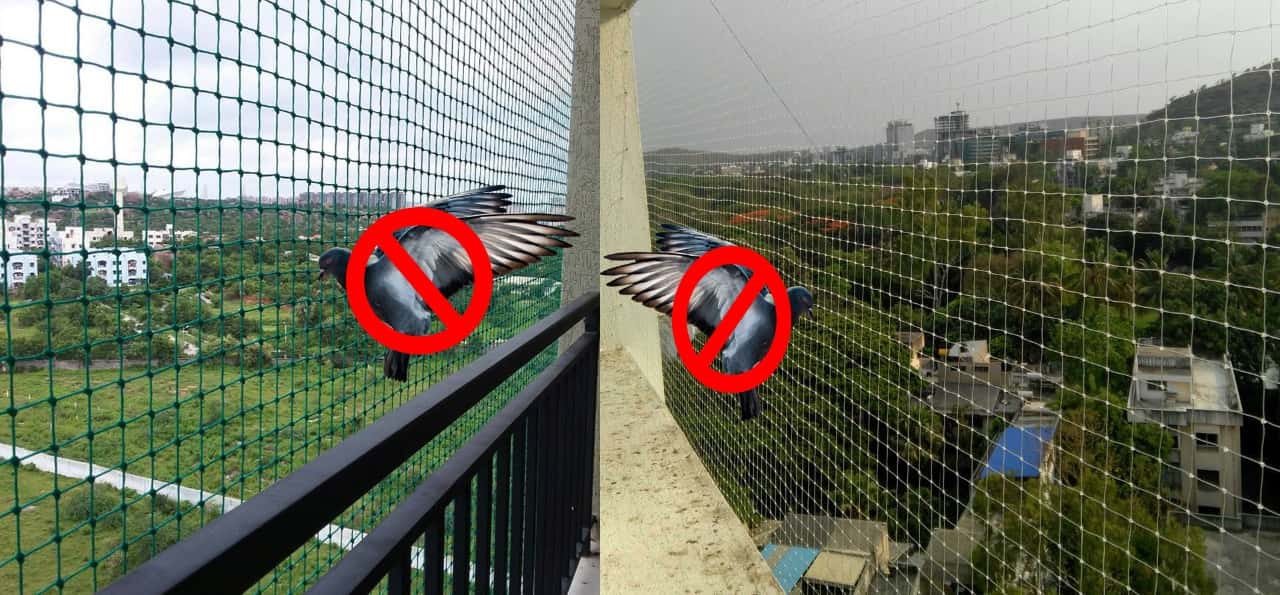
Understanding why pigeons return is the first step to understanding why only one solution actually stops them
In This Guide
You have chased them off the balcony a hundred times. You have cleaned every dropping. You removed the nest twice. You put reflective tape on the railing. They came back the next morning as if nothing had happened. If you have ever wondered whether pigeons are simply immune to effort — the answer lies in the specific biology of how pigeons navigate and why they return to established sites. This guide explains the real science and why it leads to only one permanent solution.
Quick Answer
Pigeons keep coming back because they use a multi-system navigation mechanism — scent markers, visual landmarks and magnetic field memory — to return to sites they have established as safe roosts. Cleaning removes the visible evidence but not the chemical markers that signal "safe roost" to the bird. Shooing, tape and fake owls do not change the pigeon's assessment of the site — only its temporary comfort level. The only method that permanently stops pigeons returning is physical exclusion — a pigeon net that closes the access point so the bird cannot re-enter regardless of how strongly it wants to.
The Science of Pigeon Homing Behaviour
Homing pigeons are famous for a reason. The scientific literature confirms that pigeons use multiple overlapping navigation systems simultaneously — which is precisely why they are so reliable at returning to locations they have established as home sites.
👃 Olfactory Navigation — Scent-Based Homing
Pigeons have a highly developed sense of smell that they use for navigation. They leave chemical scent markers at established roost sites — invisible to humans but detectable by other pigeons and by the bird itself across significant distances. Research published in the Journal of Experimental Biology confirms that pigeons with impaired olfaction navigate significantly less effectively, suggesting olfactory cues are a primary homing mechanism. When you clean a balcony, you remove visible droppings but not the microscopic chemical markers embedded in surface materials. The marker persists and continues to signal "safe established roost" to any pigeon within range.
🧲 Magnetic Field Memory
Pigeons detect the Earth's magnetic field and use it as a coordinate reference system. A pigeon that has established a roost site has encoded that site's magnetic coordinates into its navigation memory. This encoding is why a pigeon removed from its roosting balcony and released elsewhere will navigate back — it is comparing the magnetic signature of its current location to the remembered signature of "home." This is the same mechanism used by homing pigeons released hundreds of kilometres away to find their lofts.
🏙️ Visual Landmark Memory
Pigeons build detailed visual maps of familiar routes and landmarks. A pigeon that has roosted on your 8th floor Hitech City balcony has encoded the surrounding building layout, water tower, road pattern and vegetation into its spatial memory. It can approach from multiple directions and still identify the balcony accurately. This is why pigeons that are shooed away from one direction simply circle the building and approach again from another angle.
🤝 Social Following — New Pigeons Attracted to Established Sites
Pigeons are social birds. A roost site that has been established — identifiable by scent markers and the presence of other pigeons — acts as a beacon for additional birds. This is why pigeon problems in Hyderabad and Vijayawada apartment buildings tend to escalate over time: the first pair establishes the site, and subsequent birds are attracted to the markers and social signals. A balcony with one pair of roosting pigeons in February may have six by June if nothing changes.
A pigeon does not rely on one navigation method — it uses all of them simultaneously. If you block the visual approach (by hanging something that distracts), the pigeon uses magnetic and olfactory guidance instead. If you remove the scent markers, the visual landmark memory remains. The multi-system nature of pigeon navigation is precisely why no single deterrent works for long — the bird has redundant systems that compensate for any individual deterrent. Only physical exclusion blocks all systems simultaneously by making re-entry physically impossible regardless of how accurately the pigeon navigates.
Why Your Balcony Specifically
Pigeons do not choose balconies randomly. Specific physical characteristics make certain balconies more attractive than others — and once these characteristics are established in a pigeon's site memory, the bird returns regardless of temporary discomfort.
- Three-sided enclosure. Your balcony's ceiling and walls create a microclimate that is significantly more sheltered than open rooftops. Pigeons instinctively prefer sites with overhead cover and multiple wall surfaces — your balcony provides this perfectly.
- Elevated position with escape routes. A 4th or 8th floor balcony gives pigeons height for predator surveillance while multiple escape directions (left, right, drop, up) provide security. Ground-level nesting is risky for pigeons — height is instinctively preferred.
- Flat floor surface. Pigeons are ground-nesting birds. A flat balcony floor — especially with objects like AC units, flower pots and stored items to nest behind — matches natural nesting terrain.
- Established scent markers. Once established, these markers actively attract pigeons that have never visited your balcony before. The markers function as an advertisement of a safe site.
The Scent Marker Problem — Why Cleaning Alone Never Works
This is the most important concept in pigeon control — and the one that explains why frustrated apartment owners across Hyderabad, Vijayawada, Warangal and Karimnagar clean their balconies weekly and still have the same pigeon problem every morning.
When pigeons roost on a surface, they deposit both visible droppings and invisible chemical pheromone markers. The visible droppings are easily removed. The chemical markers are not. They penetrate into the micro-texture of concrete, tiles and plaster and persist for months after cleaning. Standard cleaning products used at household concentrations do not break down these markers effectively.
A pigeon that was roosting on your balcony on Monday will find its scent markers still present on Thursday after two cleaning sessions. It will land on a clean balcony as confidently as on a dirty one — because to the pigeon, the markers confirm this is an established safe site regardless of how it looks to you. The markers are not removed by standard cleaning. They are only made irrelevant by closing physical access so the bird cannot act on them.
6 Things That Don't Stop Pigeons Coming Back — And Why
🚫 Shooing and Chasing
Temporarily displaces the bird. Does not change its assessment that the balcony is a safe roost. The pigeon waits at a nearby perch, observes that the threat has passed, and returns. Pigeons in urban AP and Telangana have been conditioned to human presence — a person waving arms is a minor, transient inconvenience, not a predator threat.
🚫 Reflective Tape and Old CDs
Works for 3–7 days. Pigeons observe from a safe distance that the flashing object presents no actual threat, return to the balcony, and resume normal access. The tape becomes permanent background scenery within two weeks. Replacing or repositioning it extends the effect marginally — but the pigeon's homing instinct is stronger than any learned discomfort from flashing light.
🚫 Fake Owls and Rubber Snakes
Works for 2–5 days. Pigeons observe that the "predator" never moves, never attacks and is always in the same position. By day 5 it is furniture. Some pigeons will roost directly next to a stationary fake owl once habituation is complete.
🚫 Cleaning the Droppings
Removes visible mess — which is necessary for hygiene. Has zero deterrent effect on pigeon behaviour because scent markers remain. A pigeon cannot see its own dropping residue — it detects the chemical marker, which persists through standard cleaning.
🚫 Removing the Nest
A pair will rebuild within days if access remains open. Nest removal removes the physical material but not the roosting site designation — the balcony is still "home" to the pigeon regardless of whether the nest material is present. Repeated nest removal without physical exclusion is an indefinitely repeating cycle.
🚫 Ultrasonic Devices
Largely ineffective in open balcony spaces where sound disperses rapidly. Even in partially enclosed spaces, pigeons habituate to ultrasonic frequencies within days. No peer-reviewed study has confirmed sustained pigeon deterrence from ultrasonic devices in real-world urban conditions.
The Pigeon Colonisation Timeline — Why Acting Early Matters
Understanding how quickly a pigeon problem escalates from one bird to an established colony is important for understanding why pre-move-in installation is the most effective strategy in new AP and Telangana apartments.
Stop Pigeons Coming Back — Permanently
Free same-day site visit across all AP and Telangana cities. We assess the colonisation stage, advise on nest removal sequence and install the pigeon net correctly — wall-anchored, UV-HDPE, zero gaps.
What Actually Stops Pigeons Coming Back — Permanently
The only method confirmed by pigeon behaviour science to permanently stop pigeons returning is physical exclusion — making the access point physically impossible to enter regardless of how accurately the pigeon navigates back to it.
A correctly installed pigeon net does three things simultaneously that no other method achieves:
- Blocks physical access regardless of the pigeon's navigation accuracy — the bird may return to the exact balcony but cannot enter through the net.
- Prevents scent marker reinforcement — without the ability to land on the balcony surface, the pigeon cannot refresh its scent markers. Over 4–6 weeks, the markers degrade and the site loses its homing signal strength.
- Eliminates the social beacon — without roosting birds present, the social signals that attract additional birds to the site disappear. The colony dissolves when the access point is closed.
After a pigeon net is installed, the birds that were roosting will attempt to return 2–5 times over the following week. Each time they will find the net and be unable to enter. Within 1–2 weeks, return visits stop as the bird redirects its roosting behaviour to accessible sites. The problem is not managed — it is ended. Pre-move-in installation prevents the problem from ever starting — the most effective and least expensive outcome.
For more detail on installation quality — what wall-anchored means, how to check for gaps, and what questions to ask the installer — read our complete balcony safety nets guide.
Frequently Asked Questions
Stop the Cycle. Install the Net. End the Problem.
Free same-day site visit · UV-HDPE pigeon nets · Wall-anchored · Zero gaps · All AP & Telangana cities · Mon–Sun 8 AM–9 PM